
Reviewed · HISTORICAL TOURS
Riyadh: Historical City Full-Day Guided Tour with Transport
Riyadh’s past is easier to read with a local guide. This six-hour tour links the National Museum, Murraba Palace, Dira Souq, Al Masmak, and Al Rajhi Mosque, with hotel pickup and transport between stops. I especially like the mix of royal history and everyday heritage, plus the small group limit of five people.
I also like that entrance fees, taxes, and an English or Arabic-speaking guide are included. You get a useful first look at central Riyadh without arranging several separate taxis or museum visits. The main caution is guide quality. One recorded booking described a guide who was not very engaging, struggled with English, and spent too much time on a phone, so the experience may depend heavily on who leads your group.
In This Review
- Key points to know before booking
- What the six-hour Riyadh tour is really like
- The National Museum: Saudi Arabia in eight halls
- King Abdulaziz Historical Center and its outdoor park
- Murraba Palace and the old Najdi building tradition
- Dira Souq: Saudi goods, silver, and sandalwood
- Al Masmak: the fortress at the center of the modern kingdom
- Al Rajhi Mosque as the final photo stop
- Guide quality matters more than usual
- Is $250 a fair price?
- Who should book this Riyadh tour?
- Final verdict: a useful first day in Riyadh
- FAQ
- How long does the Riyadh historical city tour last?
- What sights are included?
- Does the tour visit the actual Mada’in Saleh tombs?
- Is hotel transportation included?
- What languages are available?
- How many people are in the group?
Key points to know before booking
- The National Museum anchors the day: Eight exhibition halls trace Saudi Arabia from early human history and pre-Islamic Arabia to the formation of the modern kingdom.
- Murraba Palace shows royal life in Najdi style: The palace was built for King Abdulaziz’s family using local materials and traditional regional design.
- Dira Souq is the best shopping stop: Look for copper and brass goods, silver daggers, Bedouin jewelry, dresses, carpets, and other Saudi heritage items.
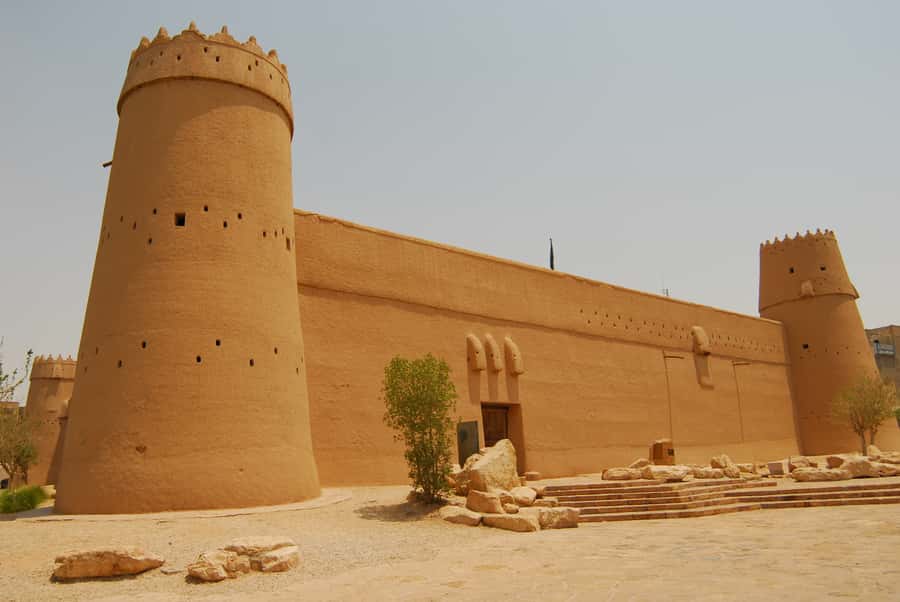
- Al Masmak connects directly to Saudi state formation: Its displays explain the fortress capture by King Abdulaziz, with the spearhead still visible in the wooden gate.
- The Mada’in Saleh reference is in the museum: You see an example of rock-cut tombs, not the actual tombs at the archaeological site.
- Small group transport keeps the day simple: The tour is limited to five participants, uses an air-conditioned van, and includes hotel pickup and return in Riyadh.
What the six-hour Riyadh tour is really like
This is sold as a full-day historical tour, but the stated duration is six hours. That makes it a concentrated city introduction rather than an all-day expedition. You move between major sights by modern air-conditioned van, with pickup and drop-off at your Riyadh hotel.
I see the transport as one of the tour’s practical strengths. Riyadh is spread out, and a private or small-group vehicle saves you from piecing together separate rides. The guide is also expected to explain what you are seeing along the way, not just open doors at each attraction.
The small group size, limited to five participants, should allow more room for questions and minor changes. The itinerary can also be customized to your preferences, which matters if you want more time at the museum or prefer to keep the market visit short.
Still, six hours goes quickly. The museum alone can absorb a large part of the day, especially if you read every display. If your guide gives brief explanations and moves quickly, you may see every stop but not spend long at each one. If you want a slow museum visit, extensive shopping, and detailed palace photography, ask about the timing before you set out.
More Historical Tours in Riyadh
- Red Sand Adventure 4×4 (Camel Ride ,Quad Biking, Heritage House)
★ 5.0 · 135 reviews - Red Sand Adventure Riyadh (Quad Biking,Camel Ride,Heritage)
★ 4.6 · 19 reviews - Red Sand Dunes Tour with Camel Ride ,Quad Biking, Heritage House
★ 4.0 · 16 reviews
The National Museum: Saudi Arabia in eight halls
The National Museum is the intellectual center of the tour. Established in 1419 as part of the King Abdulaziz Historical Center, it presents Saudi history in a broad sequence rather than treating the modern kingdom as an isolated subject.
The eight main halls cover:
- Man and the Universe
- Arab Kingdoms
- The Pre-Islamic Era
- The Prophet’s Mission
- The First Saudi State
- The Unification of the Kingdom
- Hajj
- The Two Holy Mosques
That order gives you a useful framework. You begin with early human history and the natural world, then move through ancient Arabian kingdoms, the pre-Islamic period, the arrival of Islam, and the political development of Saudi Arabia.
The museum also explains the royal family and the formation of the kingdom. For a first visit to Riyadh, this context is valuable because many later sights make more sense after you understand the role of King Abdulaziz and the early Saudi states.
Look for the prehistoric elephant skeleton and a large meteorite found in Saudi Arabia’s Empty Quarter. Rock graffiti from the Hejaz region is dated to the pre-Islamic era, and the museum includes a copy of the Rosetta Stone.
A particularly useful detail is the example of the rock-cut tombs associated with Mada’in Saleh, also known as Hegra. This is an example inside the museum, not a visit to the tombs themselves. If you are expecting a full archaeological excursion, adjust your expectations. The display gives you a visual connection to one of Saudi Arabia’s best-known ancient sites while keeping this tour focused on Riyadh.
The museum’s art and architecture displays add another layer. You see examples of Arabian and Islamic artistic traditions, as well as documents, manuscripts, antiques, and historical objects arranged in chronological order. I would ask your guide to point out the objects that best explain daily life, not only royal and political events.
King Abdulaziz Historical Center and its outdoor park
After the indoor galleries, the tour includes a walk through the National Museum park. This open area is part of King Abdulaziz’s Historical Center and provides a change of pace after the museum’s dense displays.
The park is described as a family-friendly public area with outdoor gardens. It is a good place to pause, take photographs, and let the museum material settle before continuing. You may find the garden stop especially welcome if you have spent a long time reading the exhibits.
The tour description calls these gardens among the best in Saudi Arabia, but that is a matter of taste. The practical point is simpler: you get an outdoor break without leaving the historical center.
The next stop is the Hall of King Abdulaziz, which contains old cars used by the king. This is a small but memorable way to connect the political story with objects from royal life. Cars can seem less important than manuscripts or fortresses, yet they often make a historical figure feel more concrete.
Murraba Palace and the old Najdi building tradition
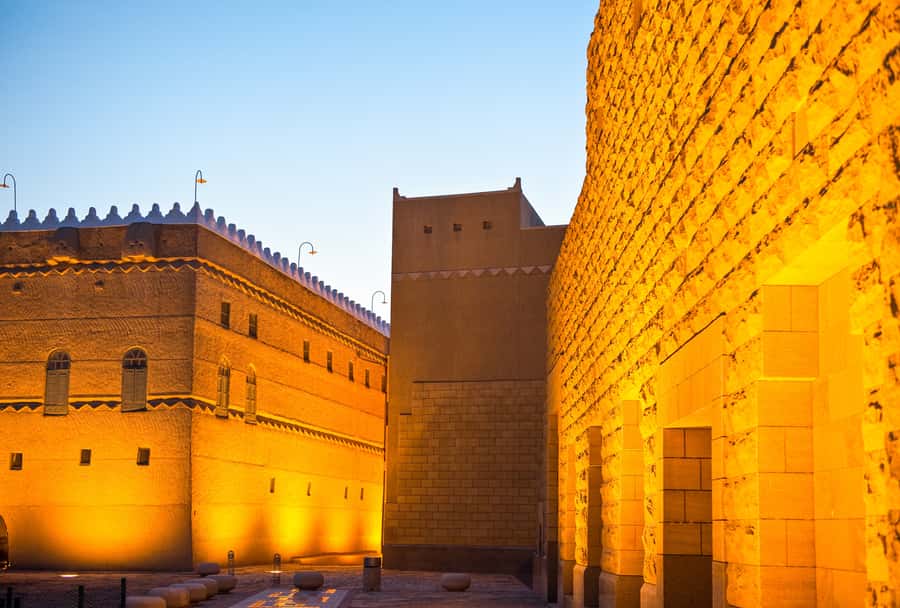
Murraba Palace was built by King Abdulaziz to accommodate his family. Its importance is not only royal. The building also shows how local materials and Najdi design shaped early twentieth-century palace architecture.
The palace was built in the traditional Najdi style, using local building materials. That makes it a useful counterpoint to Riyadh’s modern towers and broad roads. You get a look at an architectural tradition grounded in the region rather than imported from elsewhere.
This is one of the tour’s more visual stops. The itinerary specifically allows time for photographs inside Murraba Palace, so bring a camera and pay attention to the building itself, not just the rooms associated with the royal family.
The palace may not provide the same amount of historical explanation as the National Museum. Its value is more immediate: regional design, royal domestic life, and a physical sense of how the city’s earlier elite lived.
I would keep your expectations measured. This is not presented as a long palace program with a large number of galleries. It is a focused stop, and the guide’s explanation will shape how much you get from it.
A different idea for your next free day:
- Riyadh: Edge Of The World, camels &Stargazing with 4×4
★ 4.7 · 1,050 reviews - Edge of The World Riyadh with Camel Ride ,Bat Cave Visit & Dinner
★ 5.0 · 778 reviews - Riyadh: 4×4 Trip to the Edge of the World at Sunset
★ 4.9 · 719 reviews - Edge Of The World Hike(Dinner under stars,village,bats cave,camp)
★ 4.5 · 675 reviews
Dira Souq: Saudi goods, silver, and sandalwood
Dira Souq offers the most direct contact with traditional shopping on this itinerary. The market is known for old copper and brass objects, silver daggers, Bedouin jewelry, dresses, carpets, and other heritage items.
The entrance is associated with the smell of sandalwood. That detail matters because the souq is not only a collection of displays. It is a sensory stop, with objects, scents, and shopfronts that feel different from the museum’s orderly halls.
You may want to use this visit to learn what Saudi objects look like before buying anything. Silver daggers and Bedouin jewelry can be striking, while carpets and old household objects may need closer inspection. Ask your guide about the difference between a genuine older piece, a newer decorative item, and a modern souvenir if that distinction matters to you.
The souq is also where the tour feels least scripted. The museum tells you about Saudi history. Dira Souq shows how heritage is bought, worn, displayed, and carried into daily life.
Shopping time can vary. If you are not interested in purchases, you may find the stop brief. If you enjoy markets, you may wish to use the customization option to request more time here. The tour description specifically mentions antique carpets and useful Saudi heritage items, so this is the place to save room in your luggage.
Al Masmak: the fortress at the center of the modern kingdom
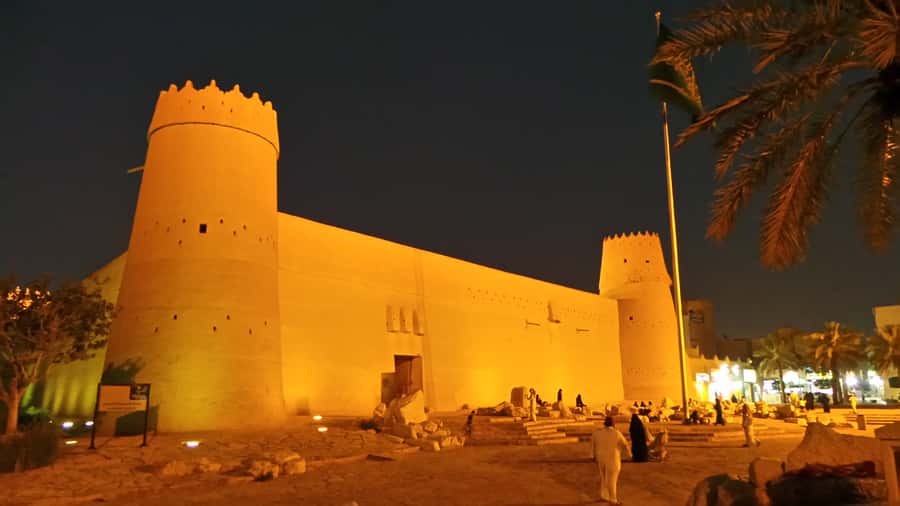
Al Masmak is the strongest historical stop for understanding Riyadh’s political story. This fortress is tied to King Abdulaziz’s capture of Riyadh, an event linked to the later unification of Saudi Arabia.
Inside, exhibitions use maps, photographs, historical objects, artwork, and audiovisual material to explain the fortress and its place in the country’s development. A short documentary reenacts the capture, giving you a more active account than a wall of dates.
The most distinctive detail is on the wooden gate. The spearhead used during the attack is still embedded there. Small physical traces like this can make a major political event easier to picture.
Al Masmak is not simply an old fort to photograph from outside. The displays give you a reason to understand why the building matters. I would pay attention to the maps, since they help place Riyadh within the wider process of territorial consolidation.
This visit also balances the National Museum. The museum gives you the long sequence of Saudi history. Al Masmak narrows the focus to one fortress, one city, and one turning point.
Al Rajhi Mosque as the final photo stop
The final stop is a photo visit to Al Rajhi Mosque, one of Riyadh’s largest and most famous mosques. The tour description presents this as a photo stop rather than an extended interior visit or religious program.
That distinction is useful. You can expect a short look and photographs, not a lengthy guided examination of the mosque’s religious or architectural details. Your guide can tell you more about the building, but the supplied information does not promise a full mosque tour.
Ending here gives the day a different tone. The earlier stops focus on museums, fortresses, markets, and palaces. The mosque brings you back to the religious life that remains central to Saudi public culture.
Dress and visit procedures can vary by site, so it is sensible to ask your tour leader about current expectations before entering any religious space. The tour is listed as wheelchair accessible, which is helpful for visitors who need step-free planning, though the exact access arrangements at every individual stop are not specified.
Guide quality matters more than usual
The tour promises an English-speaking tour leader and driver, with English and Arabic listed as the available languages. The guide is meant to explain sights during the drive and throughout the visits, giving the itinerary a connected story instead of a series of unrelated stops.
That promise is important here. A museum with eight halls can feel like a parade of objects without context. A good guide can explain why the First Saudi State, the unification period, Murraba Palace, and Al Masmak belong in one day.
But you should know about a recorded weakness. One verified booking described a local guide who was minimally engaging, had difficulty speaking English, and spent a lot of time on a phone. That is a serious concern for a history-focused tour, because the guide is the main reason to pay for organized transport rather than visit the sights independently.
I would confirm the guide’s working language and ask for an active explanation of the sites at the start. If your guide is quiet, ask direct questions about King Abdulaziz, the Najdi building style, the objects in Dira Souq, and the Al Masmak capture. The small group format should make that possible.
Is $250 a fair price?
At $250 per person, this is not a cheap sightseeing day. The value depends on what you want included in the price.
You receive hotel pickup and return, transport in a modern air-conditioned van, entrance fees, an English or Arabic-speaking guide, service charges, taxes, and the ability to request itinerary changes. For a visitor who wants a simple, organized introduction to Riyadh, those pieces can add up.
The small group limit of five also improves the price calculation. You are not paying for a large coach outing with little personal attention. In theory, a small group should make it easier to ask questions, linger at a preferred stop, or adjust the order of the day.
The weak point is that the tour covers several major sites in only six hours. If you prefer long museum visits or independent shopping, $250 may feel high. If you have limited time in Riyadh and want transport, admission, and a historical overview handled in one booking, the cost is easier to justify.
I would see this as an orientation tour rather than the final word on Riyadh. It gives you the framework to return later to the museum, market, or fortress at your own pace.
Who should book this Riyadh tour?
I would recommend it most to first-time visitors who want a broad introduction to Saudi history without managing transport between scattered sites. Families may also appreciate the air-conditioned van, outdoor park, museum, and small group setting.
It suits you if you enjoy a mix of objects, architecture, shopping, and political history. The itinerary is not limited to royal buildings, and it does not treat the city as only a modern business center.
You may want another option if you dislike guided touring, need several hours at one museum, or expect a visit to the actual Mada’in Saleh tombs. The tour includes a museum example of the rock-cut tombs, not the archaeological site itself.
The guide issue is the main reason I would not book without a little confirmation. Ask who will lead the tour, what language they speak comfortably, and how much time is normally spent inside the National Museum. Those answers will help you decide if the price matches your expectations.
Final verdict: a useful first day in Riyadh
I like this tour because it connects Riyadh’s main historical chapters in a sensible order. The National Museum gives you the timeline, Murraba Palace shows royal life and Najdi design, Dira Souq brings in traditional commerce, and Al Masmak explains the city’s role in the formation of modern Saudi Arabia.
The six-hour schedule is efficient, but it can also feel tight. The $250 price is reasonable for a small group with transport, entrances, taxes, and a flexible plan, provided your guide is engaged and comfortable in your chosen language.
Book it if you want a convenient first look at old Riyadh and prefer someone else to handle the driving. Skip it if your priority is a slow, self-guided museum visit or a dedicated archaeological trip. Before paying, confirm the guide arrangements and ask to protect enough time for the National Museum and Dira Souq, the two stops most likely to reward extra attention.
FAQ
How long does the Riyadh historical city tour last?
The stated duration is six hours. It is described as a full-day tour, but the scheduled experience itself lasts six hours.
What sights are included?
The tour includes the National Museum and National Museum Park, the Hall of King Abdulaziz, Murraba Palace, Dira Souq, Al Masmak, and a photo stop at Al Rajhi Mosque.
Does the tour visit the actual Mada’in Saleh tombs?
No. You see an example of the Mada’in Saleh rock-cut tombs inside the National Museum. The tour information does not include transport to the actual archaeological site.
Is hotel transportation included?
Yes. Transfers by modern air-conditioned van from your hotel in Riyadh are included, along with return transport to your hotel.
What languages are available?
The tour lists English and Arabic as available languages. The guide is described as an English-speaking tour leader and driver.
How many people are in the group?
The experience is limited to five participants. It is described as a small-group tour and is listed as wheelchair accessible.
More City Tours
- Riyadh Full City Tour
★ 5.0 · 22 reviews - Riyadh City Tour with Camel Riding
★ 5.0 · 13 reviews - Riyadh: Full Day City Tour Guided with Transport
★ 4.8 · 3 reviews - Al Madinah: City Sightseeing Hop-On Hop-Off Bus Tour
★ 3.9 · 148 reviews
Just added around Riyadh
- Edge of the World Tour★ 5.0 · 3 reviews
- Riyadh: Full Day City Tour Guided with Transport★ 4.8 · 3 reviews
- Riyadh: Dining Experience at The Globe Restaurant★ 3.7 · 3 reviews
- Riyadh: King Fahad National Library Guided Tour★ 4.5 · 3 reviews
- Architectural Wonders of KAFD, An Iconic Destination★ 5.0 · 3 reviews
- Explore Edge of The World in a Private Trip with Saudi Dinner★ 5.0 · 3 reviews
- From Riyadh: Desert ATV Quad Bike Tour with Camel Ride★ 3.7 · 3 reviews
- Riyadh: Edge Of The World Tour★ 5.0 · 4 reviews
Historical Tours, compared.
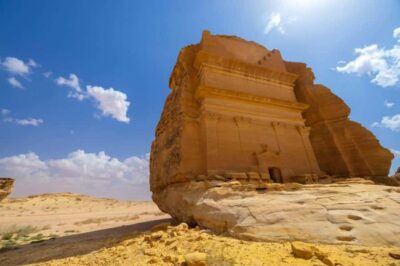
Visiting The Incredible Heritage Site Hegra in AlUla
Read our review →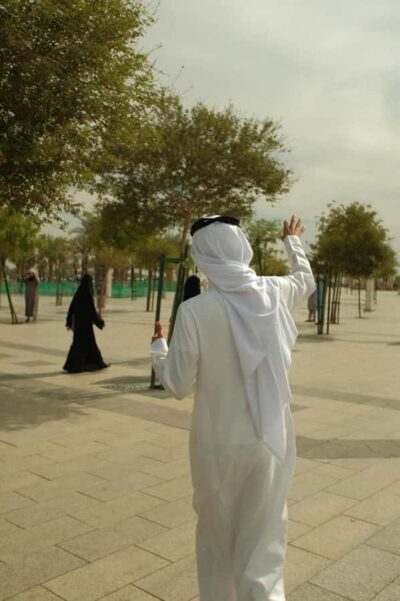
Madinah Culture & History Tour – Led by Local Guide
Read our review →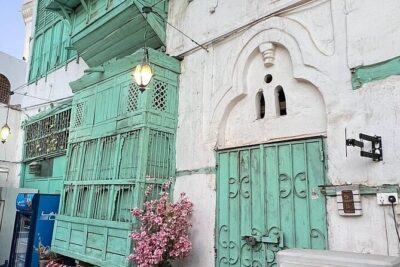
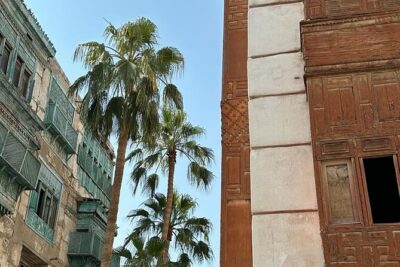
Historic District Tour in Jeddah by a Local Guide
Read our review →
Experience Madinah’s Culture and Historical sights
Read our review →
Historical & Heritage Tour in Abha- Rijal Almaa Village
Read our review →
Private Tour in Historical Jeddah (ALBALAD) إكتشف جدة التاريخيه
Read our review →Browse the lists this tour appears in