
Reviewed · HISTORICAL TOURS
Makkah’s (Mecca) Ziyarat : Holy, Historical Places (Private Tour)
Makkah’s sacred geography rewards careful planning. This private Ziyarat tour gives you an air-conditioned car, bottled water, WiFi, and a flexible route through major Hajj and Islamic sites. I like the private format, especially for a small group of up to three, and I like the chance to connect Mina, Arafat, Muzdalifa, Thawr, Hira, and several historic mosques in one outing. The main drawback is time: two to three hours is too short for a detailed visit, and some stops may amount to a drive-by.
You pay $93 per group, not per person, which can be fair if three people share the cost. But you should see this as private transport with religious context, not a long walking tour with full access to every site. Pickup delays, traffic around the Haram, closed areas, and a driver who may offer limited guiding can affect the experience.
In This Review
- Key points to know before you book
- Why this route matters in Makkah
- Mina and the physical route of Hajj
- Jabal-e-Rehmat and the day at Arafat
- Muzdalifa and the night between Arafat and Mina
- Mount Thawr and the journey to Madinah
- Jabal al-Nour and the cave of Hira
- The Mosque of the Jinn and nearby historic mosques
- The Great Mosque and the Kaaba
- What the private vehicle adds
- Price, timing, and real value
- Who should book this Makkah Ziyarat tour?
- Should you book it?
- FAQ
- How long does the Makkah Ziyarat tour take?
- How many people can join the private tour?
- Which places are visited?
- Does the tour include transportation?
- Can non-Muslims join this tour?
- Is there an extra charge for airport or train station pickup?
Key points to know before you book
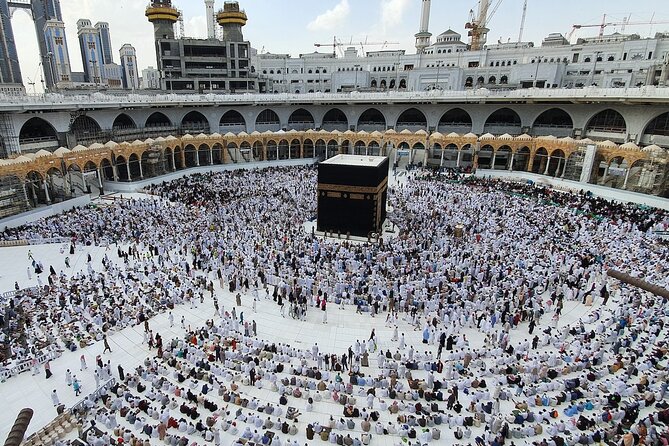
- Seven major stops in roughly two to three hours: The route covers Mina, Jabal-e-Rehmat, Muzdalifa, Mount Thawr, Jabal al-Nour, the Mosque of the Jinn, and nearby historic mosques.
- A private car for up to three people: Your group rides alone, with pickup and drop-off within Makkah City.
- A Hajj-focused route: Mina, Arafat, and Muzdalifa help you understand the movement and rituals of the pilgrimage.
- Mount Hira is not a quick sightseeing stop: The cave requires a serious climb, so ten minutes is enough only for a view of the mountain area.
- Traffic can change the day: Road closures around the Haram and heavy Ramadan traffic have caused late pickups and difficult time slots.
- The price works best for a small group: At $93 total, three people pay about $31 each before any airport or train station surcharge.
Why this route matters in Makkah
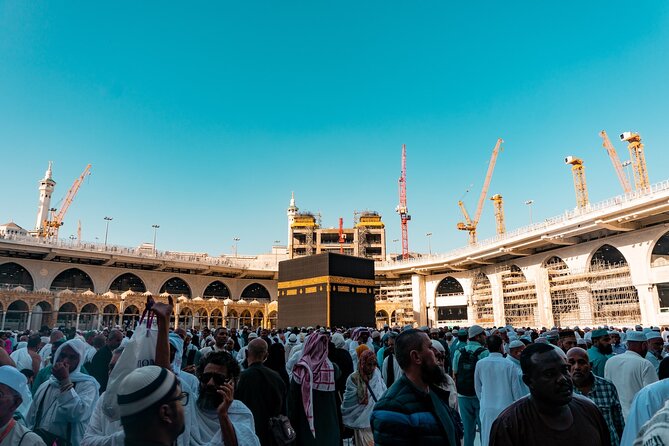
Makkah is the birthplace of Prophet Muhammad, peace be upon him, and the home of the Kaaba in Masjid al-Haram. For Muslims, it is the direction of prayer and the center of Hajj and Umrah. A Ziyarat route here is not simply a sightseeing drive. Each stop connects to worship, the life of the Prophet, the Sahabah, or the movements of pilgrims during Hajj.
The value of this experience comes from putting several places into one clear sequence. Mina lies east of the Haram, Arafat lies farther out, and Muzdalifa sits between the two. Seeing them by car helps you understand the physical route followed during Hajj, even if you do not have time for long visits.
The tour also reaches sites connected with the Prophet’s migration and the first revelation of the Quran. That gives the trip a wider frame. You move from the rites of Hajj to the early Muslim community and then to places tied to the Prophet’s private worship and revelation.
Still, you need realistic expectations. The advertised stops include places where a proper visit can take much longer than the allotted minutes. The tour is best for orientation, prayerful reflection, and seeing the setting. It is not designed for climbing every mountain or spending extended time at each site.
More Makkah and Mecca tours:
- Makkah: Jabal Al-Nour, Cave Hira, and Mount Arafat Tour
★ 4.8 · 33 reviews - Makkah Hotel to Jeddah Airport Private Transport
★ 5.0 · 25 reviews - Makkah Hotel to Medina Hotel Private Umrah Cab
★ 5.0 · 24 reviews
Mina and the physical route of Hajj
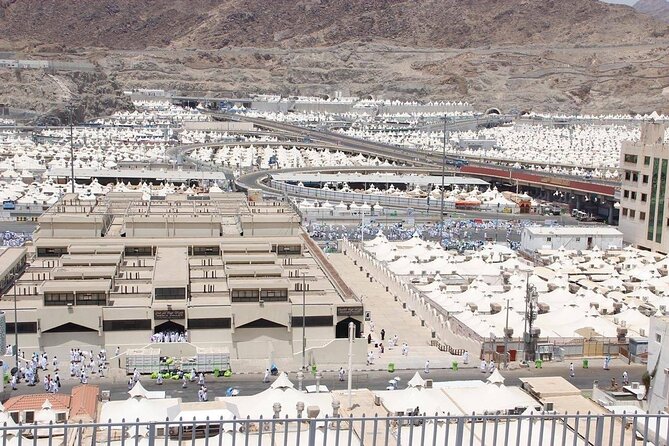
The first major stop is Mina, about seven kilometers east of Masjid al-Haram. During Hajj, pilgrims stay here overnight on the 8th, 11th, and 12th of Dhul Hijjah, with some remaining through the 13th. Mina also contains the Jamarat, the three stone pillars involved in the stoning ritual.
You are scheduled for about 15 minutes here. That is enough to understand the location and hear a short explanation from the driver or guide, but it is not enough for a detailed visit. The meaning of Mina comes from its role in the wider Hajj route, so pay attention to how it relates to Arafat and Muzdalifa rather than expecting a museum-style stop.
Admission is free. The value here is geographic and religious context. If you are performing or have performed Hajj, this part of the route can help connect personal ritual with the places where it takes place. If you are visiting Makkah for the first time, ask the guide to explain the order of the Hajj movements clearly.
Jabal-e-Rehmat and the day at Arafat
Jabal-e-Rehmat, also called Jabal Ar-Rahmah or the Mount of Mercy, is a hill in the Arafat valley outside Makkah. It is associated with the Prophet Muhammad’s final sermon after completing Hajj.
The Hajj connection here is central. On the 9th of Dhul Hijjah, pilgrims leave Mina for Arafat, where they pray, make dhikr, and ask Allah for forgiveness. Standing at Arafat is an essential part of Hajj, and failing to reach Arafat invalidates the pilgrimage.
The planned stop is about ten minutes. That is brief, but the site does not require a long drive-around explanation to make its importance clear. The challenge is that a short stop can feel rushed if you want time for personal prayer or a closer look.
Your driver’s explanation matters here. One of the strongest features of this private format is the ability to ask questions as you go. Do not hesitate to ask for the practical order of the Hajj day, including the movement from Mina to Arafat and then to Muzdalifa.
Muzdalifa and the night between Arafat and Mina
Muzdalifa is an open area southeast of Mina, on the route between Mina and Arafat. During Hajj, pilgrims travel there after sunset on the 9th day of Dhul Hijjah. They combine Maghrib and Isha prayers, with Isha shortened to two rakats.
You have about 15 minutes at this stop. Like Mina, Muzdalifa may appear simple at first glance. Its importance comes from what happens there during Hajj, including prayer, remembrance, repentance, and the continuation of the pilgrimage route.
This is a good place to ask the guide to explain how the three locations fit together. Mina begins the Hajj movement, Arafat is the essential day of standing, and Muzdalifa follows after sunset. A private vehicle makes it easier to keep that explanation tied to the actual road.
Do not expect elaborate facilities or a large attraction to enter. This is an open area connected to pilgrimage rites. The experience is strongest when you approach it with an understanding of its religious purpose.
More Historical Tours in Saudi Arabia:
- Red Sand Adventure 4×4 (Camel Ride ,Quad Biking, Heritage House)
★ 5.0 · 135 reviews - Visiting The Incredible Heritage Site Hegra in AlUla
★ 4.6 · 93 reviews - Madinah Culture & History Tour – Led by Local Guide
★ 5.0 · 74 reviews - Historical & Heritage Tour in Jeddah Al Balad
★ 5.0 · 57 reviews
Mount Thawr and the journey to Madinah
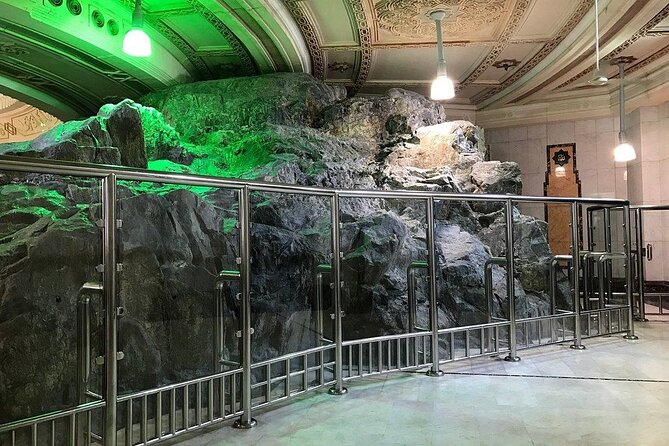
Mount Thawr is associated with the cave where Prophet Muhammad, peace be upon him, and Abu Bakr sought refuge for three days and nights while leaving Makkah for Madinah. The story connects the mountain to the Hijrah and to a critical moment in early Islamic history.
The planned stop is ten minutes. That timing is the clearest warning in the whole route. You will not climb to the cave during this visit. The stop is for seeing the mountain area and hearing the story, not for a mountain excursion.
If you want a close visit to the cave, this tour is not the right format. The short schedule and car-based route make Mount Thawr a brief point of orientation. Still, it can be meaningful to see the setting and place the migration story on a real map rather than encountering it only in books or lectures.
The route then continues toward Canal Sakeena as the final attraction mentioned for this part of the journey. No detailed visit time is given for Canal Sakeena, so treat it as a passing or brief stop rather than a major standalone attraction.
Jabal al-Nour and the cave of Hira
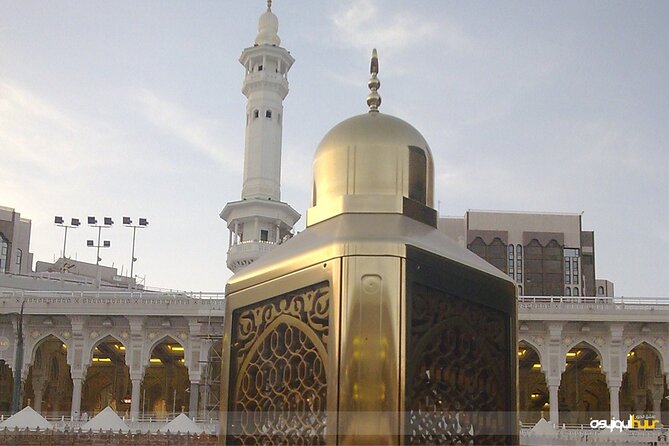
Jabal al-Nour, also called Mount Hira, lies about two miles from the Kaaba. Near its top is the small cave where Prophet Muhammad, peace be upon him, received the first revelations of the Holy Quran during Ramadan in 610 CE.
This is one of the most important places on the route, but it is also where the short schedule can mislead you. The stop is listed as about ten minutes. Reaching the cave itself requires climbing the mountain, so ten minutes cannot cover the climb and return. You should expect to see the mountain area, not complete the ascent.
The cave is described as less than four meters long and a little more than one and a half meters wide. That small scale is worth remembering. The significance of Hira comes from what occurred there, not from the size of the cave or from a grand structure at the summit.
If visiting the cave is your main goal, arrange separate time for it. The private Ziyarat ride can help you locate Jabal al-Nour, but it is not a replacement for a dedicated climb. Wear suitable footwear and plan around the physical demands of the ascent, though the supplied tour information does not specify the climb duration or current access arrangements.
The Mosque of the Jinn and nearby historic mosques
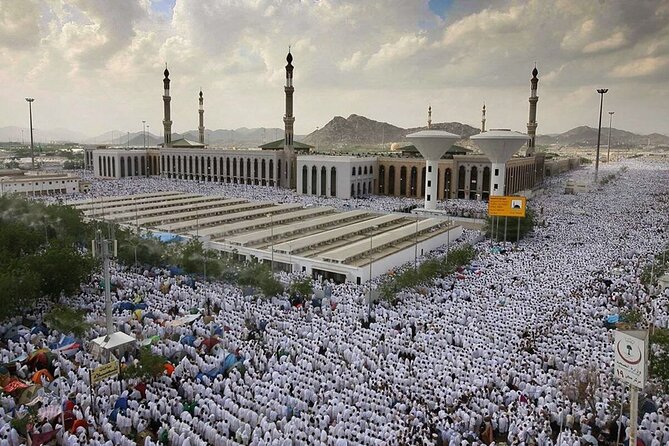
The Mosque of the Jinn, also known as Masjid Haras, is linked to an account involving the Prophet and Abdullah bin Mas’ood. The site marks the place where the Prophet drew a line for Abdullah bin Mas’ood after being commanded to recite the Quran to the jinn.
You have about 15 minutes here, followed by movement toward Masjid-e-Shajar, Masjid-e-Qamar, and Jannat al-Mualla. These nearby sites add variety to the route, shifting the focus from the Hajj grounds to early Islamic stories and Makkah’s historic religious places.
Again, the practical issue is access. A previous booking experience described the trip as a drive-by, with several places closed or unavailable for entry. The tour description does not promise interior access, so you should not assume that you will enter each mosque or site.
That does not make the route pointless. If your goal is to see locations and understand their connections, the drive can be useful. If your goal is extended prayer, architectural study, or quiet time at each site, you will need more time and possibly separate visits.
The Great Mosque and the Kaaba
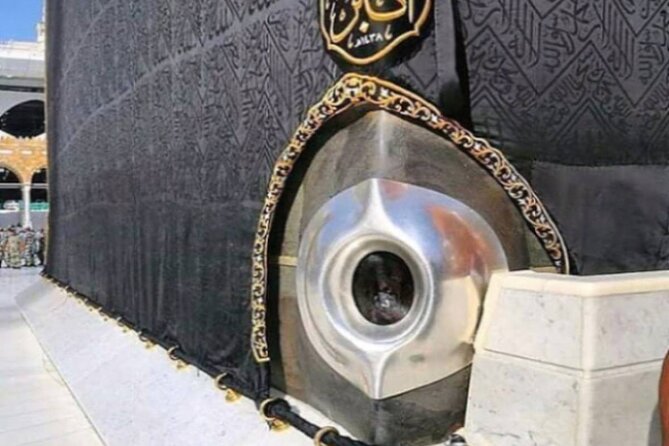
The overview places the Great Mosque and Kaaba among the major sights connected with the experience. The Kaaba is the focus of Masjid al-Haram and the direction of Muslim prayer.
You should clarify exactly how the Great Mosque fits into your pickup, route, and drop-off plan. The listed stop schedule focuses on sites outside the Haram, and the short duration leaves little room for a full visit to Masjid al-Haram. In practice, this experience should not replace the time you set aside for worship at the Great Mosque.
The private drop-off is useful if you want to finish near your selected location within Makkah City. It lets you continue your own plans after the drive, subject to traffic and road access.
What the private vehicle adds
The tour includes private transportation in an air-conditioned vehicle, bottled water, and WiFi on board. Those are practical comforts in Makkah, particularly when you are moving between several sites in a short period.
For a group of up to three, the private setup can be more comfortable than arranging several separate rides. You can keep your own group together, ask questions without a larger audience, and request some flexibility in the route. The experience provider also describes the drivers as familiar with Makkah’s holy places.
The important distinction is between a driver and a full guide. The description promises a private guide, but some booking experiences found the person in the car functioned more like a taxi driver. One pickup arrived more than 20 minutes late, and another started with confusion about who was coming and what service had been booked.
That inconsistency is the main risk. A friendly driver can still provide useful assistance, but you should confirm before departure whether you are receiving detailed commentary or mainly transportation. Send clear pickup details through the stated contact method and allow extra time around the Haram.
Price, timing, and real value
The price is $93 per group of up to three. Split three ways, that is about $31 per person. For a private, air-conditioned ride with water and WiFi, that can be reasonable if you value convenience and want to cover several distant sites in one outing.
The value drops if you expect a fully guided visit at every stop. At two to three hours, the route allows roughly ten to 15 minutes at many locations, plus driving time. Traffic can reduce that further, especially during Ramadan, when the driver may arrive late because of congestion.
An airport or train station pickup costs an additional 100 SAR, collected during the Ziyarat. That charge is separate from the listed group price, so check the pickup point before booking.
Free cancellation is available if you cancel at least 24 hours before the start time. Changes or cancellations inside that window are not accepted for a refund.
The current score is 3.5 from 11 ratings. That middle result fits the experience well: the route and private transport are useful, while timing, late pickups, vehicle condition, and limited guiding can hold it back.
Who should book this Makkah Ziyarat tour?
I would consider this tour if you have a small group, limited time, and want a simple way to see the main sacred locations outside the Haram. It also suits you if you prefer private transport and want a driver who can help connect the places to Hajj and Islamic history.
It is less suitable if Mount Hira or Mount Thawr is your main purpose. Neither mountain can be properly climbed within the advertised schedule. It is also a poor match if you need guaranteed entry into mosques or expect a long, formal lecture at every stop.
Only Muslims can participate. Most people can take part, and the tour is near public transportation, but the vehicle remains the main way to move between locations.
Should you book it?
Book this private Ziyarat tour if you want a short introduction to Makkah’s holy geography and place a high value on having your own vehicle. The best use of the tour is as an orientation ride, especially when three people share the cost.
Skip it if you want a detailed mountain visit, long prayer stops, or dependable professional guiding at every location. In that case, arrange separate transport to the specific sites that matter most and give each one the time it deserves. If you do book, confirm the pickup time, vehicle, guide role, and expected access before setting out.
FAQ
How long does the Makkah Ziyarat tour take?
The tour takes approximately two to three hours.
How many people can join the private tour?
The price covers one private group of up to three people.
Which places are visited?
The route includes Mina, Jabal-e-Rehmat at Arafat, Muzdalifa, Mount Thawr, Jabal al-Nour, the Mosque of the Jinn, Masjid-e-Shajar, Masjid-e-Qamar, and Jannat al-Mualla. The overview also refers to the Great Mosque and Kaaba.
Does the tour include transportation?
Yes. It includes private transportation in an air-conditioned vehicle, bottled water, and WiFi on board. Pickup is offered, and drop-off is available at a selected location within Makkah City.
Can non-Muslims join this tour?
No. The tour is limited to Muslims.
Is there an extra charge for airport or train station pickup?
Yes. An additional 100 SAR applies to pickups from an airport or train station, and this amount is collected during the Ziyarat.
Just added around Saudi Arabia
- Jeddah Airport to Medina Hotel Private Arrival Transfer★ 5.0 · 3 reviews
- Coffee and Tea Party in Aljadidah★ 3.5 · 3 reviews
- Edge Of The World Trip (Private Trip)★ 5.0 · 3 reviews
- Edge of the World Tour★ 5.0 · 3 reviews
- Riyadh: Full Day City Tour Guided with Transport★ 4.8 · 3 reviews
- Riyadh: King Fahad National Library Guided Tour★ 4.5 · 3 reviews
- Mecca: Holy Sites Private Tour★ 4.5 · 3 reviews
- Riyadh: Dining Experience at The Globe Restaurant★ 3.7 · 3 reviews
Historical Tours, compared.
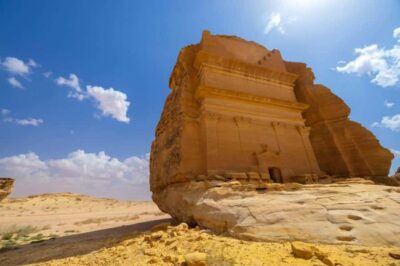
Visiting The Incredible Heritage Site Hegra in AlUla
Read our review →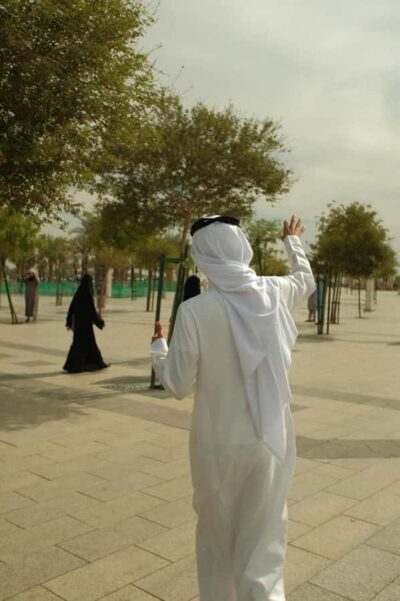
Madinah Culture & History Tour – Led by Local Guide
Read our review →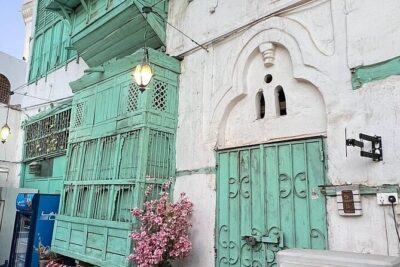
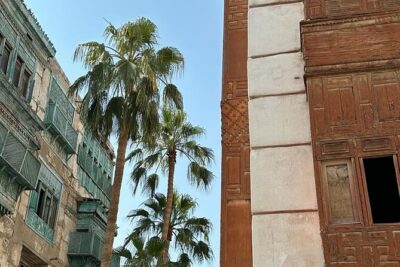
Historic District Tour in Jeddah by a Local Guide
Read our review →
Experience Madinah’s Culture and Historical sights
Read our review →
Historical & Heritage Tour in Abha- Rijal Almaa Village
Read our review →
Private Tour in Historical Jeddah (ALBALAD) إكتشف جدة التاريخيه
Read our review →Browse the lists this tour appears in