
Reviewed · MAKKAH & MECCA TOURS
Makkah Holy Places / Ziyarat: Private
Sacred places, one focused afternoon. This private Makkah tour gives you a practical way to visit major Islamic sites by air-conditioned vehicle, with hotel pickup and a route that includes Mina, Arafat, Muzdalifah, Mount Hira, and important mosques around the city. I like the private format, since you travel only with your own group of up to three people, and I also like the short duration, which leaves the rest of your day free for prayer or rest.
The strongest part is the transportation. Makkah is spread across several pilgrimage sites, and moving between them by car is far easier than trying to arrange separate taxis. Drivers such as Imran have earned praise for arriving on time, keeping the vehicle clean, and explaining the sites well. The main caution is that the guiding quality may vary. One customer found the driver’s English too limited for meaningful explanations, while another reported a late arrival that pushed the latter part of the visit into darkness.
In This Review
- Key points to know before booking
- What this private Makkah tour is really for
- Starting at Masjid al-Namirah and the plain of Arafat
- Mount Arafat and Jabal al-Rehmat
- Mina, Jamarat, and the practical side of Hajj
- Muzdalifah and the route between the holy sites
- The Kaaba and Masjid al-Haram
- Safa, Marwa, the Black Stone, and Maqam Ibrahim
- Mount Thawr and the story of the migration
- Mount Hira and the first revelation
- Masjid Jinn, Masjid Shajar, Masjid Qamar, and Jannat al-Moulla
- Vehicle, timing, and guide quality
- Who should book this ziyarat?
- Should you book it?
- FAQ
- How long does the Makkah Holy Places Ziyarat tour last?
- How many people can join the private tour?
- Is hotel pickup included?
- What type of transportation is provided?
- Does the tour visit the Kaaba?
- Does the tour include Mina?
- Does the route include Arafat and Muzdalifah?
- Does the tour include Mount Hira?
- Are food and drinks included?
- What happens if the tour lasts longer than three hours?
Key points to know before booking
- Private group of up to three: You do not share the vehicle with strangers, so the pace and stops are more personal.
- Arafat and Mina in one short route: The tour connects several places used during Hajj, including Mina, Masjid al-Namirah, Mount Arafat, and Muzdalifah.
- Hotel pickup in Makkah: The driver meets you in the lobby, with round-trip transportation included.
- Important Kaaba sites included: The route covers the Great Mosque, Kaaba, Safa and Marwa, the Black Stone, and Maqam Ibrahim.
- Only 2 to 3 hours: This is a compact orientation tour, not a long guided day in the city.
- Guide quality matters: Communication has been excellent for some bookings and weak for others, so confirm language ability before you go.
What this private Makkah tour is really for
This experience is best understood as a driving ziyarat, or visit to important religious places, rather than a full walking tour of the Great Mosque. You move between sites in a private vehicle, stop briefly, and receive explanations about their role in Islam and the annual Hajj pilgrimage.
That distinction matters. The listed route contains many places, yet the total time is only about two and a half to three hours. Most stops are planned for roughly 10 minutes. You should expect a quick look and an explanation, not long periods at each location.
I see the tour as useful for someone visiting Makkah for the first time, especially if you want to understand how the holy places fit together. It also suits families and small groups who prefer a car, hotel pickup, and a fixed route instead of negotiating taxis.
The price is $86.50 per group of up to three. For one person, that is not a bargain compared with ordinary local transport. For three people, however, it works out to less than $29 per person before any extra charges. The value comes from combining transport, a private setting, and a guide who handles the route.
More Makkah and Mecca tours:
- Makkah: Jabal Al-Nour, Cave Hira, and Mount Arafat Tour
★ 4.8 · 33 reviews - Makkah Hotel to Jeddah Airport Private Transport
★ 5.0 · 25 reviews - Makkah Hotel to Medina Hotel Private Umrah Cab
★ 5.0 · 24 reviews
Starting at Masjid al-Namirah and the plain of Arafat
The route begins around Masjid al-Namirah, associated with the plain of Arafat and the Prophet Muhammad’s farewell Hajj. The mosque is linked with the sermon delivered during that pilgrimage, making it one of the most meaningful stops on the drive.
You will likely have only a short stop here, listed at about 10 minutes. That is enough to see the setting and hear the basic story, but not enough for an extended visit or detailed study.
Arafat is central to Hajj because standing there on the ninth day of Dhul Hijjah is an essential part of the pilgrimage. The traditional phrase Hajj is Arafat expresses how important this day is. The route visits both Masjid al-Namirah and Mount Arafat, although the two descriptions overlap because both belong to the same pilgrimage area.
Mount Arafat and Jabal al-Rehmat
Mount Arafat, also called Jabal al-Rehmat or the Mountain of Mercy, is a hill on the plain where pilgrims gather for prayer, remembrance, and asking forgiveness. The tour gives you a chance to connect the physical place with the central day of Hajj.
The stop is brief, so wear comfortable clothing and keep your expectations realistic. You are not climbing the mountain as part of the tour. The information provided describes a visit to the site, not a hiking program.
This is one of the most useful parts of the route for first-time visitors. You see that Hajj is not limited to the Kaaba and the Great Mosque. Arafat, Mina, and Muzdalifah form a wider circle of sacred places, each connected to a particular stage of the pilgrimage.
Mina, Jamarat, and the practical side of Hajj
Mina lies about seven kilometers east of the Masjid al-Haram. During Hajj, pilgrims stay there overnight on the eighth, eleventh, and twelfth days of Dhul Hijjah, with some remaining through the thirteenth.
The area includes Jamarat, the three stone pillars used in the ritual stoning. On this tour, the stop is scheduled for about 10 minutes, with no admission ticket listed.
Mina helps you understand the scale of Hajj. It is not simply a single shrine visit. It is a movement between several locations, with set times and rituals. Seeing the route by car gives you a basic sense of the distance between the main pilgrimage sites without requiring a full day away from Makkah.
More tours and experiences to compare
- Medina Unveiled Private Tour
★ 5.0 · 100 reviews - Edge Of The World Tour (Private Tour)
★ 4.5 · 76 reviews - Private Tour to the Yellow Lake and Sand Dunes
★ 5.0 · 48 reviews - Private Trip to Edge Of The World Riyadh
★ 4.5 · 34 reviews
Muzdalifah and the route between the holy sites
Muzdalifah is an open area between Arafat and Mina. During Hajj, pilgrims travel there after the day at Arafat, combine the Maghrib and Isha prayers, and spend part of the night before returning toward Mina.
The visit here is short and does not include food, drinks, or an admission ticket. Its value comes from context. Once you have seen Arafat, Muzdalifah, and Mina in sequence, the movement of the Hajj pilgrimage becomes easier to understand.
Traffic affects this section of the route. Transfer times are approximate, and the operator warns that conditions depend on the time of day. This is one reason to be ready in the hotel lobby 10 minutes before departure.
The Kaaba and Masjid al-Haram
The Kaaba is the central shrine in Islam and the direction of prayer for Muslims around the world. It is located within the Great Mosque of Makkah, also called Masjid al-Haram.
The building is covered with a black silk and cotton cloth decorated with calligraphy in gold and silver-wrapped thread. The Kaaba has undergone several renovations over the centuries, while remaining the focus of prayer, Tawaf, Hajj, and Umrah.
The tour includes the Great Mosque and key places connected with the Kaaba. You should clarify with the operator exactly how the visit will work on your date. The description promises the holy places and private transportation, but it does not promise a reserved entry, a guided interior tour, or time for performing Tawaf.
That is not a weakness if you already have your own worship plans. In fact, the short schedule may suit you well. You can use the car tour for orientation and keep separate time for prayer and worship at Masjid al-Haram.
Safa, Marwa, the Black Stone, and Maqam Ibrahim
Safa and Marwa are two small hills now located within the Great Mosque. During Hajj and Umrah, Muslims travel between them seven times in the ritual known as Sa’i.
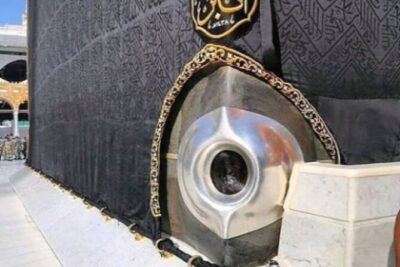
The Black Stone, or Hajar al-Aswad, sits in the eastern corner of the Kaaba. Tawaf begins and ends facing it. Its religious importance is immense, but the tour does not promise a chance to touch or kiss it. Conditions around the Kaaba can change, so treat this stop as an explanation and viewing opportunity unless your guide confirms otherwise.
Maqam Ibrahim refers to the stone associated with Prophet Ibrahim while he built the Kaaba. Islamic tradition holds that the marks of his feet remained on the stone as a reminder to believers.
These stops are especially valuable if you are unfamiliar with the order of rituals. The guide can explain how the Kaaba, Safa and Marwa, the Black Stone, and Maqam Ibrahim relate to Hajj and Umrah. Ask direct questions if you want more than a brief overview.
Mount Thawr and the story of the migration
Mount Thawr contains the cave where the Prophet Muhammad and Abu Bakr sought refuge for three days and nights while leaving Makkah for Madinah.
The tour visits the mountain area but does not describe a climb to the cave. Do not book this expecting a mountain trek. The scheduled stop is about 10 minutes, so the main benefit is hearing the story and seeing the setting from the route.
This is a good example of why the tour works better as a religious orientation than as an active sightseeing excursion. The vehicle connects places that would be difficult to cover independently, while the short stops give each site a clear place in the wider story.
Mount Hira and the first revelation
Jabal al-Nour, or the Mountain of Light, is associated with the cave of Hira. The cave lies near the top of the mountain, and the first revelations of the Quran were received there during Ramadan in 610 CE.
The description gives the cave’s approximate size as less than four meters long and a little more than one and a half meters wide. The tour does not include climbing to it, and the schedule allows roughly 10 minutes at the site.
For many visitors, this is one of the most important stops outside the central mosque. You see the mountain connected with the beginning of the Quranic revelation, then continue by vehicle rather than spending hours on a demanding climb.
Masjid Jinn, Masjid Shajar, Masjid Qamar, and Jannat al-Moulla
Masjid Jinn is associated with an account in which the Prophet drew a line for Abdullah bin Masood while reciting the Quran to the Jinn. The mosque is also known as Masjid Haras.
After Masjid Jinn, the route continues toward Masjid Shajar, Masjid Qamar, and Jannat al-Moulla. The supplied details do not give a separate stop time for each of these places, so you should expect this final section to move quickly.
Jannat al-Moulla is particularly important as a historic cemetery in Makkah, but the tour information does not specify the exact viewing or entry arrangements. Ask the driver whether you will stop, view the site from the vehicle, or receive an explanation while passing through.
Vehicle, timing, and guide quality
The tour includes a private air-conditioned vehicle and pickup from your Makkah hotel. The driver meets you in the lobby, and you should be waiting 10 minutes before the scheduled start.
The maximum tour time is listed as 2 hours 30 minutes to 3 hours. Extra time costs 50 SAR per hour for a sedan, 100 SAR for an SUV, and 150 SAR for a Hi-Ace or Coaster, payable in cash. Those charges make punctuality important, especially if you want to avoid traffic-related extensions.
Communication takes place through WhatsApp, so provide your full phone number with the country code. If you cannot find the driver, call the operator. One booking had a one-hour delay, which caused the later part of the trip to take place after dark. That makes it sensible to confirm the pickup time on the day itself.
The strongest praise has gone to drivers who arrive promptly, keep the vehicle clean, and offer sincere service. Imran is specifically praised for his timing, family-friendly service, and explanations. At the same time, English ability may not be consistent. If detailed religious explanations are important to you, confirm the guide’s language skills before paying.
Who should book this ziyarat?
I would recommend it to:
- Small groups of up to three who want a private vehicle
- First-time visitors who need a basic map of Makkah’s holy places
- Families who prefer short stops and door-to-door transport
- People with limited time between prayer, rest, and other plans
- Visitors who want to see the Hajj route without arranging several taxis
I would be more cautious if you want a long, scholarly explanation at every stop. The schedule is tight, and the guide’s English may be limited. I would also avoid treating this as a hiking tour, since the mountain locations are visited by vehicle and the stops are short.
Each passenger may bring one suitcase and one carry-on bag. Oversized or extra luggage may be restricted, so check before departure if you are carrying large equipment.
Should you book it?
Book this tour if you value private transport, a compact schedule, and a broad look at Makkah’s pilgrimage sites. At $86.50 for up to three people, the price is fair when shared, especially since hotel pickup and an air-conditioned vehicle are included.
Do not book it solely for a guaranteed English-speaking guide or extended time inside the Great Mosque. Confirm those details first. If the operator assigns a prompt driver who can explain the sites clearly, this can be a useful and respectful introduction to the sacred geography of Makkah. If communication is weak, you may receive transport with only limited guiding.
Free cancellation is available up to 24 hours before the start time. That gives you room to adjust plans, but changes or cancellations inside that window are not accepted.
FAQ
How long does the Makkah Holy Places Ziyarat tour last?
The tour lasts approximately 2 to 3 hours, with a maximum stated duration of 3 hours.
How many people can join the private tour?
The price covers one private group of up to 3 people.
Is hotel pickup included?
Yes. Pickup and drop-off are offered within Makkah City, and the driver meets you in the hotel lobby.
What type of transportation is provided?
Private transportation in an air-conditioned vehicle is included.
Does the tour visit the Kaaba?
The route includes the Kaaba and the Great Mosque of Makkah, along with Safa and Marwa, the Black Stone, and Maqam Ibrahim.
Does the tour include Mina?
Yes. Mina is included as a stop, with approximately 10 minutes scheduled there.
Does the route include Arafat and Muzdalifah?
Yes. The route includes Masjid al-Namirah, Mount Arafat or Jabal al-Rehmat, and Muzdalifah.
Does the tour include Mount Hira?
Yes. Jabal al-Nour, also known as Mount Hira, is included as a stop.
Are food and drinks included?
No. Food and drinks are not included.
What happens if the tour lasts longer than three hours?
Extra time is charged in cash at 50 SAR per hour for a sedan, 100 SAR per hour for an SUV, and 150 SAR per hour for a Hi-Ace or Coaster.
Just added around Saudi Arabia
- Jeddah Airport to Medina Hotel Private Arrival Transfer★ 5.0 · 3 reviews
- Coffee and Tea Party in Aljadidah★ 3.5 · 3 reviews
- Edge Of The World Trip (Private Trip)★ 5.0 · 3 reviews
- Edge of the World Tour★ 5.0 · 3 reviews
- Riyadh: Full Day City Tour Guided with Transport★ 4.8 · 3 reviews
- Riyadh: King Fahad National Library Guided Tour★ 4.5 · 3 reviews
- Mecca: Holy Sites Private Tour★ 4.5 · 3 reviews
- Riyadh: Dining Experience at The Globe Restaurant★ 3.7 · 3 reviews
Makkah & Mecca Tours, compared.
Jabal Al-Nour, Cave Hira, and Mount Arafat Tour
Read our review →
Makkah’s (Mecca) Ziyarat : Holy, Historical Places (Private Tour)
Read our review →
All Ground transfers Saudi Arabia, Jeddah to Makkah Makkah to Medina to Airport
Read our review →
A Spiritual Journey Through the Holy Sites of Makkah
Read our review →
Browse the lists this tour appears in